This is a subtitle for your new post
Should You Allow Pets in Your Rental Property?
A Property Manager's Perspective
Jerrica Seilstad, LPM, RPM Candidate
June 2026
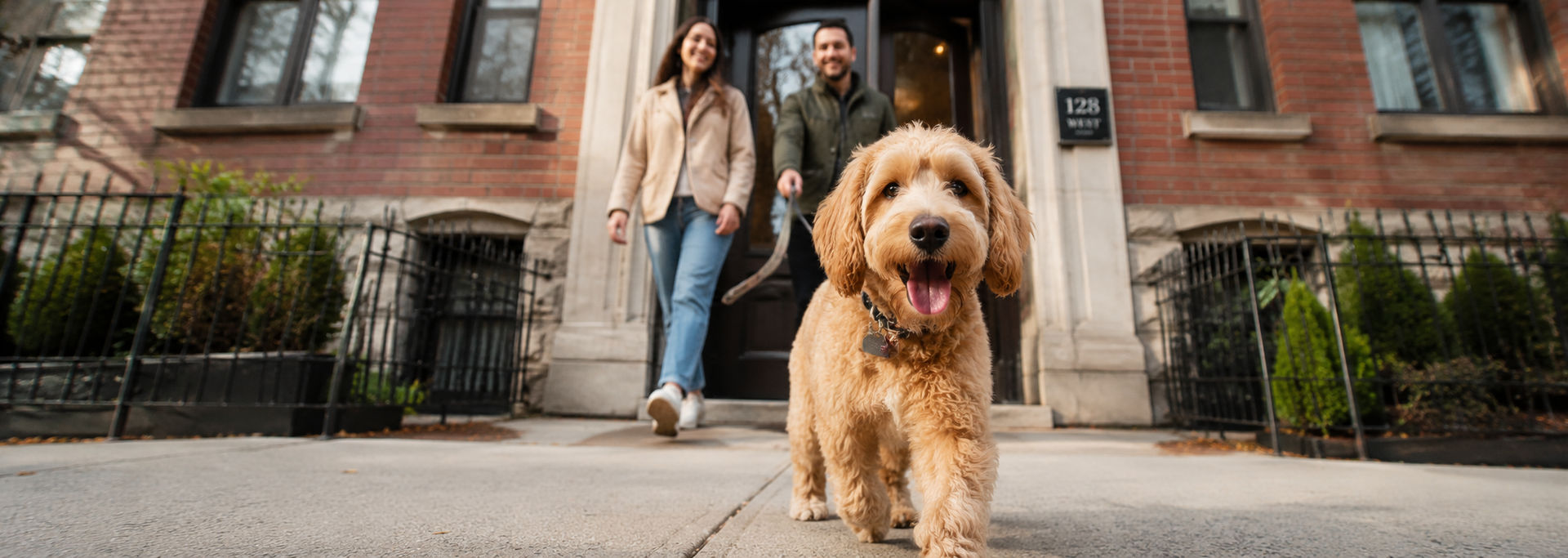
For many rental property owners, one question sparks more debate than almost any other: "Should I allow pets?" If you've ever had to replace carpet, repair scratched doors, or remove lingering pet odors, it's understandable why you might lean toward a strict "No Pets" policy.
At JK Property Management, however, we've found that a well-managed pet policy often produces better long-term results than a blanket prohibition.
Here's why.
The Reality: Most Renters Have Pets
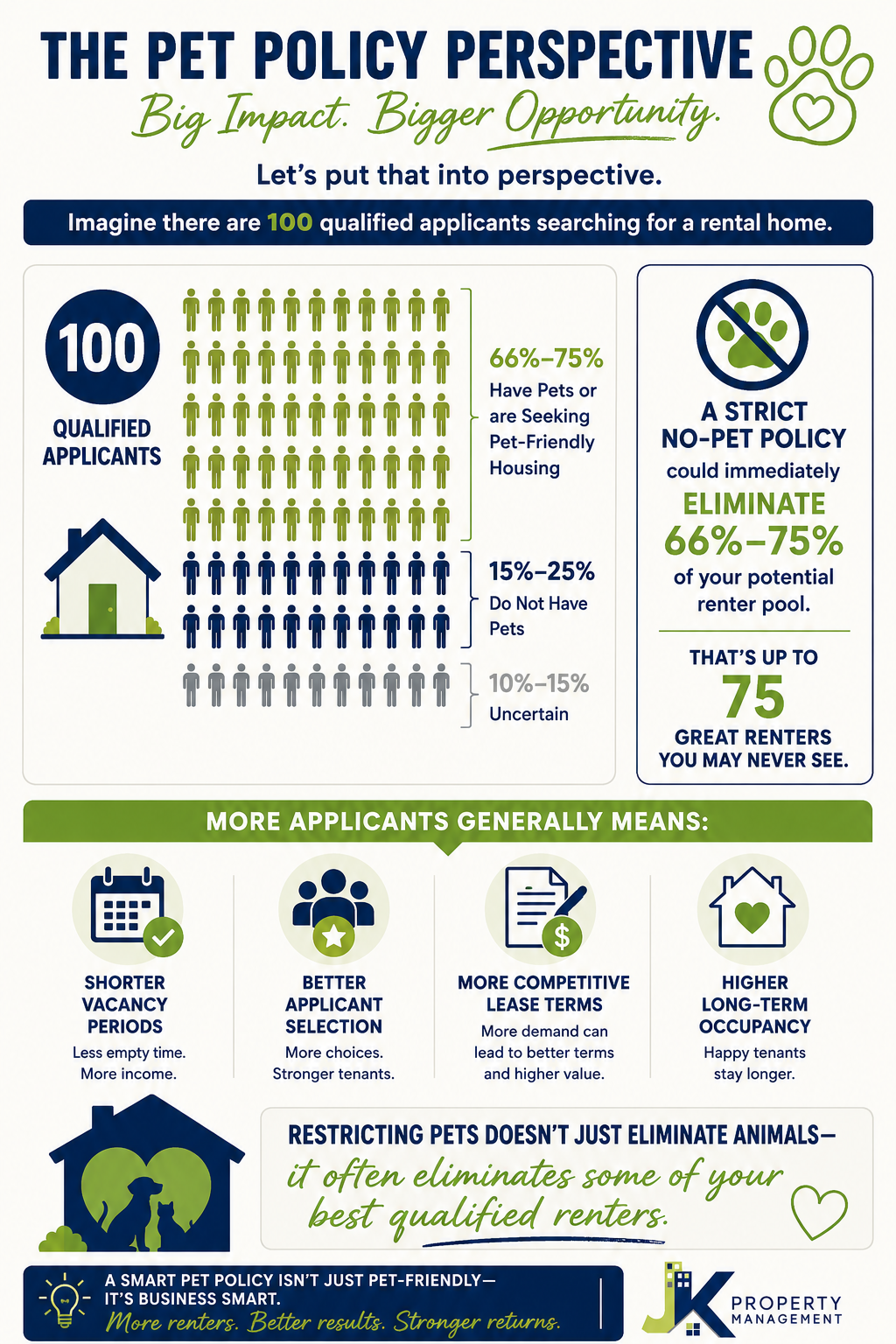
Pets aren't a niche anymore—they're part of the family for millions of Americans. According to the 2025 Pets & Housing Data Report, nearly 8 out of 10 rental properties advertise themselves as pet-friendly, yet fewer than 10% are considered truly pet-inclusive because many still impose restrictive breed, weight, or fee policies. The same report found that 72% of renters report difficulty finding pet-friendly housing, despite the majority of housing providers allowing at least some pets. According to the American Pet Products Association, approximately 66% of U.S. households own at least one pet. While pet ownership rates among renters vary by market, this means that for every 100 prospective applicants, roughly 66 may own a pet. By prohibiting pets, a landlord could substantially reduce the pool of otherwise qualified applicants before considering credit, income, or rental history.
Let's put that into perspective...
Imagine there are 100 qualified applicants searching for a rental home. If approximately two-thirds to three-quarters of those applicants have pets or are searching specifically for pet-friendly housing, a strict no-pet policy could immediately eliminate a significant portion of your potential renter pool.
More applicants generally means:
- Shorter vacancy periods
- Better applicant selection
- More competitive lease terms
- Higher long-term occupancy
Restricting pets doesn't just eliminate animals
—it often eliminates some of your best-qualified renters.
If You Don't Allow Pets, They Don't Always Disappear...
One unfortunate reality in property management is that some renters will still bring pets into the home—even when they're prohibited. Others attempt to classify their pet as an Emotional Support Animal (ESA). It's important to understand the difference.
What Is an Emotional Support Animal?
An Emotional Support Animal is an animal that provides comfort or emotional support to an individual with a qualifying disability.
Unlike service animals:
- ESAs are not required to receive specialized training.
- They are not considered service animals under the Americans with Disabilities Act (ADA).
- Housing laws—not the ADA—have traditionally governed ESAs through reasonable accommodation provisions under the Fair Housing Act. Recent HUD guidance has narrowed how these requests are evaluated, but legitimate accommodation requests still exist and should be reviewed individually.
Unfortunately, the rapid growth of online "ESA certification" services has also created confusion. The 2025 Pets & Housing Report found that 41% of ESA designations were motivated at least in part by housing needs, and many respondents cited breed or weight restrictions as a reason for seeking ESA status. This does not mean every ESA request is illegitimate. Many individuals genuinely rely on assistance animals as part of managing a disability. However, it does illustrate that restrictive pet policies can encourage some renters to seek workarounds rather than openly discussing their pets.
A Better Strategy: Manage the Risk Instead of Avoiding It
Rather than hoping renters won't have pets, we believe it's more effective to create clear expectations. At JK Property Management, we help owners reduce risk by implementing:
- Appropriately calculated security deposits
- monthly pet rent
- Clear lease language outlining pet responsibilities
- Routine property inspections
- Prompt maintenance reporting
- Resident education about protecting the property
These practices allow us to identify concerns early—long before they become expensive repairs.
Periodic Inspections Protect Your Investment
One of the most effective ways to reduce pet-related damage has nothing to do with pets. It's inspections. Regularly scheduled property inspections allow us to monitor:
- Flooring condition
- Carpet wear
- Interior doors and trim
- Landscaping
- Fence damage
- Odors
- Unauthorized animals
- General housekeeping
Small problems are significantly less expensive to address than major repairs after move-out. Inspections protect both the owner's investment and the resident by creating opportunities to resolve issues while they're still manageable.
Pets Can Actually Improve Resident Retention
Moving with pets is difficult. Finding another quality rental that accepts animals can be even harder. Because of that, pet-owning residents often stay longer when they've found a home that welcomes their entire family—including the four-legged members. Longer tenancy means fewer turnovers, lower vacancy costs, reduced marketing expenses, and more consistent rental income. For many owners, those savings outweigh the manageable risks associated with allowing pets.
Our Philosophy
Every property is different, and not every home is a good fit for every animal. However, after years of managing rentals throughout Great Falls and the surrounding area, we've found that thoughtful pet policies generally outperform blanket pet prohibitions. By combining reasonable pet fees, regular inspections, clear lease expectations, and proactive resident communication, we help owners protect their investment while opening their property to a much larger pool of qualified applicants. At the end of the day, successful property management isn't about eliminating every possible risk. It's about understanding those risks—and managing them well. If you're wondering whether a pet-friendly policy makes sense for your rental property, we'd be happy to help you evaluate the options and build a strategy that protects your investment while maximizing its earning potential.